 Measuring Behavior
Organiser
Dimitris Voudouris, Aristotle University of Thessaloniki.
Summary
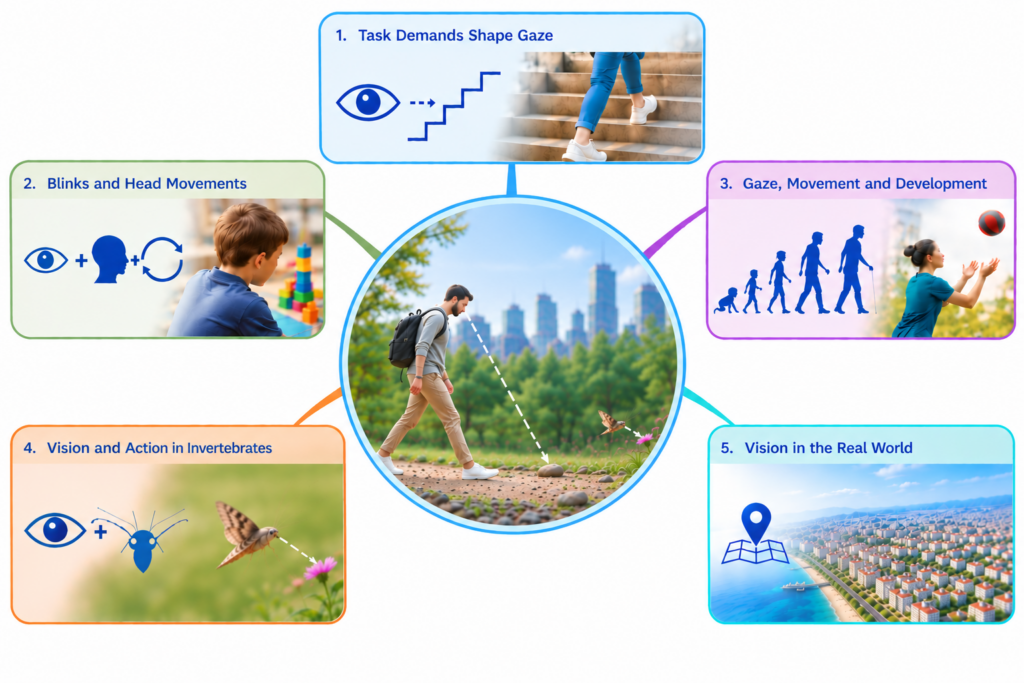
Understanding how vision guides behaviour requires moving beyond isolated eye movements towards examining gaze as an integral component of ongoing actions. Traditional eye-tracking research often relies on constrained laboratory settings, overlooking how eye, head and body movements interact in everyday activities and how environmental context shapes visual behaviour.
This symposium brings together complementary approaches to studying visuomotor behaviour in humans and animals. The presentations explore how task demands influence gaze during everyday activities, how eye and head movements coordinate to support visual information acquisition, and how gaze should be understood in relation to ongoing body movements and developmental changes. They also showcase methodological advances in mobile eye tracking, computer vision and behavioural quantification, including applications to real-world spatial navigation and visually guided behaviour in hawkmoths.
Together, these contributions highlight the importance of studying gaze in dynamic, ecologically valid settings to better understand how visual information guides action and how individual visuomotor strategies emerge.